
People love to tell you how to be brave, but today I am going to speak of something for which I am an actual expert – how to become a coward. This is an area in which I am in an embarrassment of riches of experience.
If you haven’t yet noticed my love for definitions, I will draw attention to it now. Cowardice is a word often bandied about but rarely defined. We have a sense that we know precisely what it means without ever pinning down the specifics. I do the same. Sometimes it is not even the definitions, but the synonyms, which are most interesting. In the case of cowardice, three stand out to me that could be cultivated to great effect.
First: faint-heartedness. To understand what is meant by heart, I could go on a broad and in-depth analysis of the literal and figurative meanings of “heart” across many cultures and time periods. Instead I am going to simply say that this is a matter of affections. Cowardice can be cultivated through a weak heart, through feeble or absent affection. When you love and desire for nothing, there is no impulse for bravery.
Second: spiritlessness. What is spirit? This too may be the affections, though it may also be deemed a kind of breathlessness since the word for “spirit” in many languages has the connotation (or denotation) of breath. It may be useful to think of this in terms of will rather than anything else. If you have a strong spirit, you tend to have strong will. But I would contend that we use the term spirit largely in terms of an inward focus of the will. A spirited person may act outwardly, but their spirit is will driven inward rebounding outward rather than pure external action. We might also think about this in terms of mind. When one has a “spirited debate” there is a forcefulness in the intellectual space.
Third: spinelessness: This relates to the body, and indicates figuratively a weakness of will, but places its epicenter in the physical body. A lack of will expressed in a weak frame. A lack of action or bravery in relation to an inactive or incapable body.
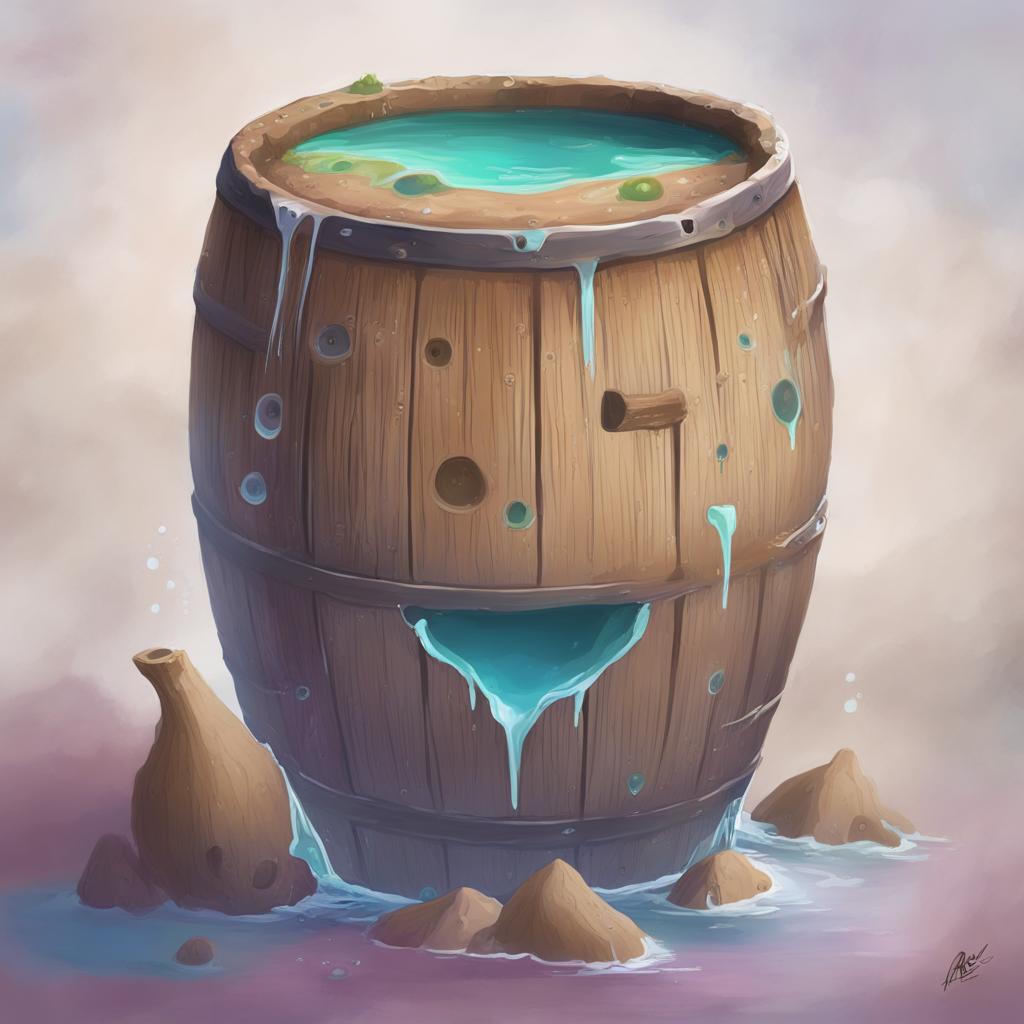
Yet let’s return to the whole idea of cowardice to begin with. The oracle (thy name is Google) tells us that cowardice is simply defined as a “lack of bravery.” How in the world can I cultivate a lacking. How do I grow an absence? I am reminded of a silly riddle I was asked recently by a seven year old. What can you fill something with to empty it more quickly? Holes of course.
If I want to cultivate, or rather enable, cowardice the best way to do it is to fill the self with holes through which bravery can leak. Spirit, heart, physical strength, find ways of expending them, create leakage. Blow holes in the self and courage will flow out and away. Cowardice will be the result. It is not an accident that many cowards, myself included, speak of feeling broken. Broken vessels do not hold what they were intended to hold – indeed they cannot. When the affections are always leaking through you like a sieve, how are you to gather enough to focus them in some specific direction? When every beautiful girl who walks past you takes a piece of you with her, your affections are leaking. It is no wonder that you lack the courage to pursue one.
The enemy distracts in just this way – and for this reason. It takes energy to exercise the will and affections – and distractions sap that energy. We are finite beings, with finite resources across the whole of our being. The devious danger of distraction is that it robs us of the energy needed for what we are really called to do.
But where does fear play in? Isn’t cowardice about fear, not distraction? Well, simply fear and desire are inseparable entities. If you think about why you fear a certain thing, generally it is because it threatens something you desire. Sometimes, even, you learn to desire something simply because you fear it (which is a directional problem).
What you fear reveals what you desire, and what you desire may indicate some of your fears. Why compete at the risk of losing when you can not play and risk nothing, yet be happy-ish. Much of cowardice is a kind of affectional settling, expectation management. Don’t hope. Don’t long for. Don’t love. Each high just makes the follow-on drop that much more painful.
As C.S. Lewis once said, “It would seem that Our Lord finds our desires not too strong, but too weak. We are half-hearted creatures, fooling about with drink and sex and ambition when infinite joy is offered us, like an ignorant child who wants to go on making mud pies in a slum because he cannot imagine what is meant by the offer of a holiday at the sea. We are far too easily pleased.”
Too easily pleased, but never truly satisfied as we throw away our God-given strength on vain pursuits. We cultivate cowardice by weakly loving, desiring, and pursuing many foolish things so that when occasion for courage is needed, we have not the strength to rise to it. We also cultivate cowardice by maintaining strong desires in opposition. To love both God and money is impossible for this reason. The coward seeks to hold to both and gains neither. Cowardice is the pernicious fruit of unconstrained curiosity and undisciplined desires, lack of faith, and strong confusion.
So, if you’d like to cultivate cowardice, choose nothing, commit to nothing, rather love and chase everything. Keep juggling everything you can think of, and then add a few more things. Drive yourself through with holes so that all the energy that you would need to pursue God with full-force is dissipated in a thousand follies, yes, even a thousand foolish “goods.”



Leave a Reply